
Health & Safety Policy for Commercial Waste Removal Hendon
This document sets out the policy and practical measures that govern safe operations for our commercial waste services and rubbish removal activities. It applies to all staff, contractors and subcontractors working for or on behalf of the company while delivering commercial waste removal, commercial rubbish removal and associated collections within our service area.The purpose of this policy is to control risks, prevent injury and illness, and ensure that waste disposal, transfer and site clearances are performed with competence and due care. The policy is designed to be accessible, enforceable and subject to regular review. Managers and supervisors are expected to demonstrate leadership in implementation and compliance.
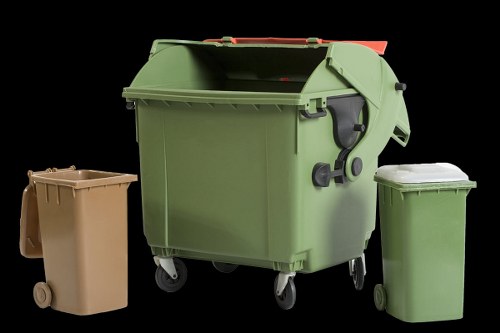 Scope: This policy covers operational activities including vehicle loading and unloading, manual handling, use of mechanical handling aids, segregation of waste streams, secure containment of loose material, management of sharps and clinical-like wastes where encountered, and the safe operation of equipment used by a rubbish company. It also addresses interaction with client sites, waste transfer notes, and the control of hazardous substances that may be present in commercial waste.
Responsibilities and Duties
Overall responsibility for health and safety rests with the company leadership. Day-to-day responsibilities are delegated as follows: managers and supervisors must maintain safe systems of work and ensure that operational staff are trained and competent; drivers must ensure vehicle safety and load security; operatives must follow instructions and use PPE correctly.Employees have a duty to report hazards, near misses and incidents without delay. Contractors engaged for specialist waste removal or plant hire must demonstrate equivalent safety arrangements before work begins. The policy promotes a culture of continuous improvement and encourages reporting and consultation.
Risk Assessment and Safe Systems
Risk assessments are carried out for all standard tasks and for one-off site-specific activities. Assessments consider manual handling, vehicle movements, traffic interaction, slips/trips, hazardous substances, sharps, fire, and lone working. Controls include the use of trolleys, mechanical lifters, exclusion zones, banksman procedures, and clear segregation of recyclable, non-recyclable and hazardous streams. Identified controls are recorded and applied in standard operating procedures for commercial waste management.Training and competence are central to this policy. All new recruits receive induction training covering safe work procedures, PPE, fire response and incident reporting. Refresher training is provided periodically and when procedures change. Records of training are retained to demonstrate competence in the handling, loading and transportation of commercial refuse and related materials.
Personal protective equipment is provided where risks cannot be eliminated. Staff must wear appropriate gloves, hi-vis clothing, safety footwear and eye protection as required. Respiratory protection and other specialist PPE will be supplied when handling dusty loads, chemical residues or suspected hazardous wastes. Equipment maintenance schedules ensure lifting aids and vehicle restraints remain effective.
Safe vehicle operation is an essential element: vehicles must be maintained to a high standard, loads secured and inspections completed before each shift. Drivers are required to follow traffic laws, apply defensive driving principles, and use banksmen for reversing where visibility is restricted. Loading plans and gross vehicle weight limits are observed to reduce the risk of accidents.
Emergency procedures cover spillage, fire, injury and environmental releases. Spill kits, fire extinguishers and first aid equipment are available at depots and on vehicles as appropriate. Incident response instructions are part of induction and displayed in operational areas. All incidents and near misses are investigated to identify root causes and corrective actions.
Handling of hazardous or unknown waste is approached with caution. When suspect materials are encountered, operations are stopped and advice sought from a competent person. Where segregation or containment is required, operatives must follow the waste carrier's procedures to preserve safety and environmental protection. Records of special waste movements are maintained in line with waste transfer protocols.
 Monitoring, audit and review: The company conducts routine inspections, toolbox talks and safety audits to verify that controls are effective. Performance indicators such as incident frequency, training completion and audit findings are reported to senior management. The policy is reviewed annually or following a significant incident to ensure continued suitability.
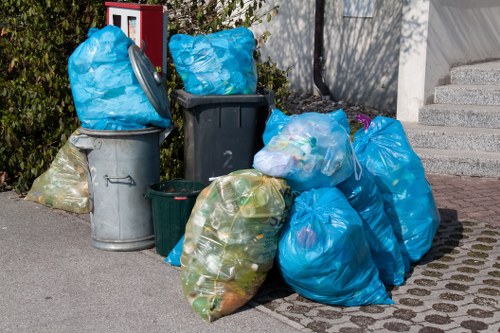 Contractor and client liaison: Where the company undertakes commercial waste services at client premises, responsibilities are agreed in writing. Clients are informed of any requirements for access, exclusion zones and segregation of waste streams. Contractors are required to provide evidence of their safety arrangements and to adhere to site-specific rules.
Record keeping supports accountability. Risk assessments, method statements, training records, inspection checklists and incident reports are retained for an appropriate period. These records support continuous improvement, legal compliance and the demonstration of due diligence in delivering robust rubbish removal and waste disposal services.
Policy commitment: The company is committed to protecting the health and safety of employees, contractors and the public while delivering commercial waste removal and rubbish collection services. Senior management will ensure resources are available to implement this policy and that responsibilities are communicated. This document represents the formal position on health and safety and should be read in conjunction with operational procedures and risk assessments.
